The short answer: two to four games
A comfortable starting point is one planned game for roughly every 30 to 45 minutes of celebration time. You do not have to fill every gap. Guests also need time to arrive, eat, talk, take photos, watch gifts being opened, and simply enjoy one another.
Match the number of games to your schedule
| Shower length | Plan | Good rhythm |
|---|---|---|
| About 60 minutes | 1–2 games | One quick icebreaker and, if time allows, one main game |
| About 90 minutes | 2–3 games | One near the beginning, one after food, and an optional extra |
| About 2 hours | 3–4 games | Two written games plus one social or active game |
| 3 hours or more | 3–5 games | Spread activities out and keep at least one as a backup |
These are planning ranges, not rules. A relaxed brunch with close family may need only one activity. A coed shower with guests who do not know one another may benefit from an extra icebreaker.
Choose variety, not just quantity
Three games that all feel the same can drag. Instead, give each one a different job:
- Warm people up: a name tag prompt, prediction card, or quick “who knows the parents?” activity.
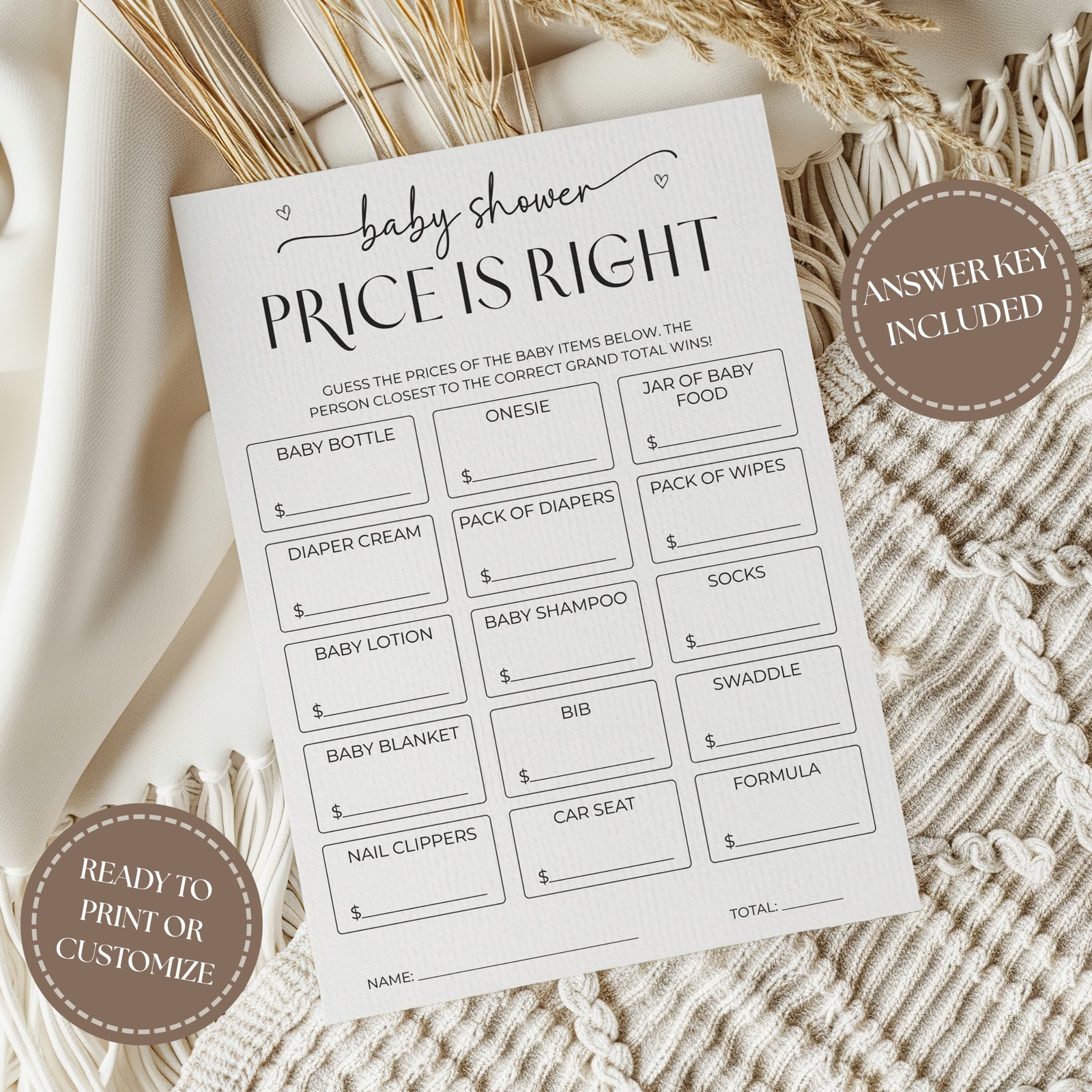
- Create a shared laugh: a price-guessing, emoji, trivia, or “who said it?” game.
- Offer a calm moment: baby bingo, advice cards, or a word search while guests eat or gifts are opened.
A sample two-hour baby shower timeline
- First 20 minutes: arrivals, drinks, and an optional self-directed activity.
- 20–45 minutes: food and conversation.
- 45–60 minutes: main written game, then announce the winner.
- 60–90 minutes: gifts, dessert, or photos; use baby bingo if you want a game that runs alongside the moment.
- Final 30 minutes: one short group game, prizes, and relaxed goodbyes.
How long should each game take?
Aim for five to ten minutes to explain and play a written game, plus a few minutes to check answers and award a prize. Active games can take 10 to 20 minutes. If an activity needs a long explanation, test the instructions on someone before the shower.
Keep one optional game in reserve
Print one extra activity but do not announce it in advance. If lunch is late or the room needs a lift, you have an easy plan. If conversation is flowing, skip it. A game you never use is better than rushing guests through one they did not need.
What should you choose first?
Start with the guest mix. If many people are meeting for the first time, prioritize a simple inclusive game that does not depend on knowing the parents well. If your group is already close, personal trivia and story-based games can be wonderful.
Then choose your easiest win: a game you can download, print, and explain in one sentence. You can always add a more elaborate activity once the basics are covered.